
Car Battery Or Alternator? How To Tell What Actually Caused Your Breakdown
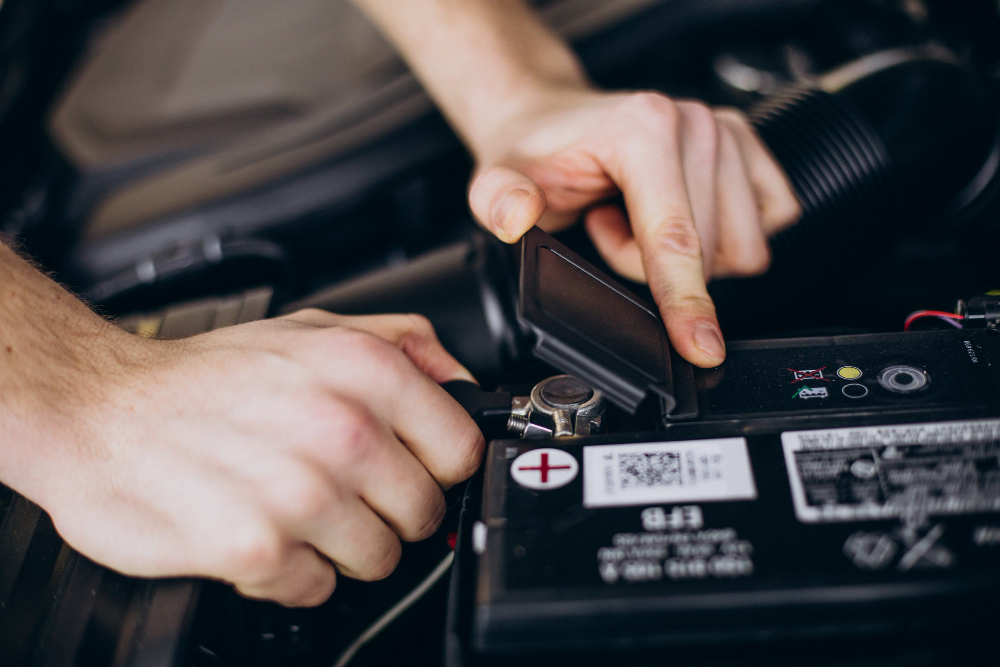
Your car won’t turn over, and you’re stuck in a parking lot. The immediate assumption is usually a dead battery. It makes sense, as batteries die all the time in Qatar’s summer heat. But if you call for an emergency car battery service, swap the battery out on the spot, and drive off, you might find yourself stranded again two days later.
If a faulty alternator is the actual culprit, a new battery won’t solve the problem. It just gives you enough charge to drive a few kilometers before the whole electrical system shuts down again. Knowing how to tell the difference saves time, prevents wasted money on unnecessary parts, and helps you get the right help on the roadside.
Why Battery And Alternator Symptoms Get Mixed Up
The battery and the alternator do two completely different jobs, but they share the same work environment.
- The car battery gets the engine started by sending a quick burst of power to the starter motor.
- The alternator takes over once the engine is running. It generates electricity to power the air conditioning, headlights, and radio while pushing power back into the battery to keep it charged.
When one breaks, the other suffers. A failed alternator stops recharging the battery, leaving you with a completely dead car battery. On the flip side, an old or shorted battery forces the alternator to work constantly at full capacity, which can overheat its internal voltage regulator. When your engine refuses to crank, both parts look guilty.
Signs Your Car Battery Is The Culprit
Battery failures almost always show up right at the moment you try to start the vehicle.
- Slow, sluggish cranking: The starter motor turns over painfully slowly, sounding like it is fighting through thick liquid.
- Rapid clicking sounds: Turning the key or hitting the start button produces a fast click-click-click. The starter solenoid is trying to engage, but there isn’t enough power to spin the engine.
- Dim lights before starting: The cabin lights or dashboard screens look faint before you even attempt to turn the key.
- Needing frequent jump starts: If you need a battery jump start on Tuesday and the car is dead again on Thursday, the battery is no longer holding a baseline charge.
- A swollen battery case: Qatar’s intense heat bakes batteries under the hood. If the plastic sides are bulging or you see white powder around the terminals, the battery has physically degraded.
If your car starts up normally after a quick boost and continues running smoothly for the rest of your drive, the battery or its connections are usually responsible.
Signs The Alternator Is Causing The Problem
Unlike a weak battery, an alternator failure usually reveals itself while you are actively driving or idling at a signal.
1. The battery light comes on while driving
That red battery icon on your dashboard doesn’t automatically mean you need a car battery replacement. It actually monitors overall voltage across the charging system. If this light turns on while the engine is running, the alternator isn’t producing enough power.
2. Electrical systems start glitching
When an alternator loses efficiency, the car’s computer cuts power to non-essential systems to keep the engine running. You might notice:
- Air conditioning blowing warm air unexpectedly
- Power windows rolling up in slow motion
- Dashboard displays or headlights flickering
- Headlights dimming or brightening as you press the gas pedal
3. The car starts with a jump, then dies immediately
This is the simplest test you can perform. A jump start supplies external electricity to fire up the engine. But once you disconnect the jumper cables, the car relies entirely on the alternator. If the engine sputters and dies seconds after the cables come off, the alternator isn’t making electricity.
4. Whining or grinding noises
A worn-out alternator bearing or a loose belt makes a high-pitched whining noise from the engine bay that gets louder as engine speed increases.
Battery Vs. Alternator: Quick Symptom Guide
Symptom | Likely Battery Issue | Likely Alternator Issue |
Engine turns over slowly or clicks | Yes | Rare |
Car stalls while actively driving | No | Yes |
Dashboard warning light on while driving | Rare | Yes |
Lights dim when engine is OFF | Yes | No |
Engine dies immediately after jump start | No | Yes |
New battery goes flat within a few days | No | Yes |
Why Qatar’s Climate Accelerates Electrical Failures
Driving in Qatar puts heavy strain on vehicle electronics. Ambient temperatures above 40°C cause the fluid inside lead-acid batteries to evaporate, destroying their internal plates. Because of this, most car batteries in Doha need replacing every 18 to 24 months.
At the same time, driving through summer traffic with your air conditioning blasted on high, headlights on, and seats cooled creates a massive electrical load. This forces the alternator to work harder in extreme heat. Catching early warning signs like a slow crank or faint dashboard lights helps prevent sudden breakdowns on busy roads.
Why Replacing The Battery Without Testing Is A Mistake
When your car won’t start, buying a new battery feels like the easiest fix. But if the underlying issue is a faulty alternator or a loose belt, that fresh battery will drain flat within a short drive. You end up paying for a new unit without fixing the real problem.
A proper assessment checks three basic things before swapping parts:
- Battery voltage under load: Verifies if the battery can actually hold power when the starter motor pulls electricity.
- Terminal connections: Ensures metal posts are tight and free from corrosion.
- Alternator output: Confirms the alternator generates between 13.5 and 14.5 volts while the engine runs.
How We Help At Aone Roadside Assistance
Our team at Aone Roadside Assistance knows how disruptive a sudden breakdown can be to your day. Whether you are parked outside your house, at the office, or stuck on the highway, our mobile units respond quickly across Doha and surrounding areas.
Our 24/7 services include:
- Emergency Car Battery Service: On-site battery and alternator testing before making any repairs.
- Mobile Car Battery Replacement: Delivery and installation of heat-resistant batteries directly at your location, complete with warranty coverage.
- On-Demand Jump Starts: Safe, surge-protected jump-starting for discharged batteries.
- Full Roadside Support: Assistance with flat tires, fuel delivery, and flatbed towing service if your vehicle requires workshop repairs.
Our technicians focus on diagnosing the exact fault so you get the right fix without guessing.
Frequently Asked Questions
1. Can a bad alternator ruin a brand-new car battery?
Yes. Driving with a broken alternator completely drains a new battery, causing deep discharge cycles that permanently damage its internal cells.
2. How long does a car battery typically last in Qatar?
Due to high temperatures, car batteries in Qatar usually last between 1.5 and 2.5 years.
3. Will a jump start fix an alternator problem?
No. A jump start only provides temporary power to turn the engine over. It cannot fix an alternator that isn’t generating electricity.
4. Is it safe to drive if the battery warning light comes on?
No. Pull over safely as soon as you can. Once the battery drains, the engine will stall completely.
5. Can Aone replace my car battery on-site anywhere in Qatar?
Yes. Aone Roadside Assistance provides 24/7 mobile battery testing, delivery, and installation across Doha and wider Qatar locations.
6. What if my car cannot be fixed on the roadside?
If the issue turns out to be a dead alternator or a mechanical fault, our team provides flatbed towing service to move your vehicle safely to a service center.
