
Why Car Batteries Fail Faster in Qatar’s Heat (And How to Avoid It)
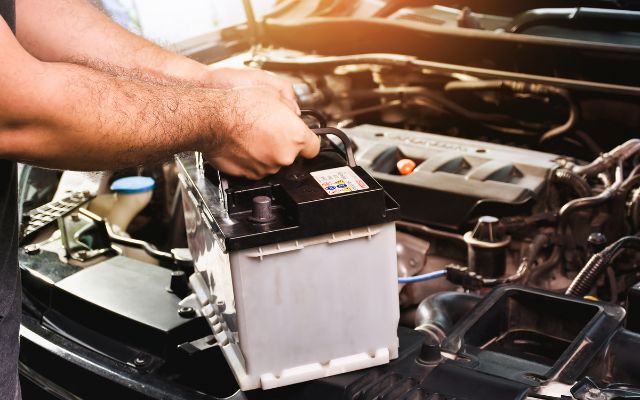
You replace the battery. It works fine for a year, maybe a bit longer, then the same symptoms return. Slow starts. A warning light. Eventually, nothing. And at some point the frustration stops being about the battery and starts being about the pattern.
That pattern has a straightforward explanation. Qatar’s climate is genuinely hostile to lead-acid batteries in a way that most battery manufacturers do not advertise clearly on the packaging, and most drivers only discover through repeated experience.
If you have been looking for car battery replacement nearby more times than feels reasonable, you are not unlucky. You are just operating in one of the worst climates on earth for the type of battery sitting under your bonnet.
What the heat is actually doing inside the battery
Car batteries work through a chemical reaction between lead plates and an electrolyte solution. That reaction is sensitive to temperature. The cold slows it down. Heat speeds it up. The problem is that faster is not better here, past a certain threshold, running the reaction hotter accelerates corrosion on the lead plates and causes the electrolyte to evaporate faster than it should.
The battery does not blow up. It does not fail spectacularly. It just ages in fast-forward.
In Germany or Canada, a quality battery runs four to six years without issue. In Qatar, where under-bonnet temperatures in summer push past 70 degrees Celsius and cars parked outside in August can get considerably hotter inside, two to three years is a realistic lifespan. Some batteries do not make it to two. That is not a manufacturing defect. That is a climate problem that the manufacturer’s rated lifespan was never calculated for.
The signs that show up before it actually dies
Most batteries in Qatar do not fail without warning. The warning just tends to get dismissed.
What heat-degraded batteries typically do first:
- Start the car slowly in the morning, particularly if it has been parked outside overnight
- Show inconsistent electrical behaviour, windows slower than usual, dashboard lights appearing without an obvious cause, the air conditioning taking a beat longer to respond
- Produce headlights that are noticeably dimmer at idle than when the engine is revving
- Develop a swollen or misshapen battery case
That last point matters more than it looks. A bloated battery case is not cosmetic. The internal plates have expanded from sustained heat exposure and the battery is structurally compromised. It needs replacing, not monitoring.
The slow starts and the flickering electrics tend to get written off as just the car getting old, or the heat doing something vague. Sometimes drivers are right. More often, they are a few weeks from being stranded somewhere inconvenient, wishing they had acted on the hesitation they noticed two Tuesdays ago.
The habits that accelerate the problem
Qatar’s climate creates the base condition. How most people use their cars in Qatar makes it worse faster.
Short drives in stop-start traffic
The alternator recharges the battery while the engine runs. But an engine idling in traffic, with the air conditioning running flat out, is not recharging the battery. It is barely keeping up with the electrical demand. Drivers who do a 20-minute crawl through Doha traffic every morning and evening, and not much else, are running their batteries in a semi-discharged state most of the time. That causes sulphation on the lead plates, which permanently reduces the battery’s capacity to hold charge.
Sitting with the engine off and accessories running
Understandable in Qatar’s summer, but expensive over time. Parked with the engine off, running the radio or charging phones, the battery drains without the alternator to replenish it. Once or twice is nothing. As a regular habit, it shortens the battery’s life in a way that compounds with everything else on this list.
Parking in direct sun when covered parking is available
Not always a choice. But when it is a choice and covered parking is nearby, the thermal difference matters. A battery in a car that has been sitting in direct sun for eight hours in July is under sustained heat stress. Over a summer, that adds up.
Buying the cheapest available option
This one actually costs more money over time, not less. A standard European-specification battery is not designed for Gulf operating conditions. Batteries rated for hot climates use different plate compositions and electrolyte formulations. The cheaper standard battery fails faster in Qatar. A slightly more expensive heat-rated unit lasts longer. The maths over two replacement cycles favours the better battery, usually by a meaningful margin.
What genuinely helps
A few habits that actually make a difference, in rough order of usefulness.
Regular voltage checks are the most practical one. A battery resting below 12.4 volts with the engine off is not holding a full charge. Catching that before it becomes a complete failure means you get to choose when and where the replacement happens rather than having the battery make that decision for you.
If most of your driving is short urban trips, a longer 45-minute drive once or twice a month gives the alternator enough running time to fully replenish the battery. Slightly tedious advice, but it works and costs nothing.
When the battery does need replacing, ask specifically for a battery rated for high-temperature or tropical operation. Amaron, Bosch Silver, and Exide all produce variants built for Gulf climates. The price premium over a standard battery is small. The lifespan difference in Doha’s conditions is not.
And if covered parking is consistently available to you, use it. The battery runs ten degrees cooler on average across Qatar summer ages noticeably slower. Not a dramatic fix, but a real one.
The age question most drivers never ask
A lot of drivers in Qatar have no idea how old the battery in their car is. It came with the vehicle, it started the car, end of story.
Worth reconsidering. A battery over two years old in Qatar’s climate deserves a proper load test, not just a voltage reading at the terminal. A load test checks how the battery performs under the actual current demand of starting the engine. Batteries can show a healthy resting voltage and still fail a load test. That means they start the car on a mild morning and let you down on a 45-degree afternoon when the load is higher and the battery is hot.
Two years old in Qatar is not the same as two years old in Manchester. Treating a battery check as routine at that point, rather than waiting for a symptom, is genuinely the more sensible approach. Finding a car battery replacement nearby when you have decided to look is a different experience from finding one when you have no choice.
When you replace, the job is not done at installation
Two things matter after the new battery goes in, and both get skipped more than they should.
First, the alternator needs testing with the engine running after installation. A failing alternator is sometimes the reason the battery degraded faster than expected. Fit a new battery without checking this and the same pattern repeats. The new battery drains steadily. You are back to the same problem within a week and wondering what went wrong.
Second, several European vehicles, many BMWs, Mercedes-Benz models, and Volkswagens among them, require the new battery to be registered with the engine management system. Without this step, the alternator charges the new battery using the old battery’s profile, which shortens the new unit’s life. Not every service carries the diagnostic equipment for this on-site. Worth asking before booking.
When it has already failed
Everything above is for batteries that are declining but still functioning. When it is already dead, when the car will not start and you are somewhere in Doha without good options, none of the forward planning advice helps at the moment.
What helps is having already identified a car battery replacement nearby that comes to you, carries the right stock, and does the full job on location. Not a service that diagnoses and then disappears to source the part. One that arrives with the battery, fits it, tests the alternator, and leaves you with a car that works.
That is the moment where preparation makes the difference between a 30-minute inconvenience and a half-day problem.
Aone Roadside Assistance
Aone provides on-site battery replacement across Doha and Qatar around the clock. They carry stock for a wide range of vehicles, test the alternator post-installation, and complete the job at your location.
For car battery replacement nearby at any hour!
Frequently Asked Questions
1. Why do car batteries fail faster in Qatar’s heat?
Extreme heat accelerates internal chemical reactions, causing faster corrosion and electrolyte loss. This significantly reduces battery lifespan compared to cooler climates.
2. What are the early signs of a heat-damaged car battery?
Slow starts, dim headlights, and inconsistent electrical performance are common signs. A swollen battery case is a serious indicator that immediate replacement is needed.
3. How long do car batteries typically last in Qatar?
Most batteries last around 2 to 3 years due to high temperatures. This is much shorter than the 4 to 6 years expected in cooler regions.
4. What habits can shorten your car battery life?
Frequent short drives, using electronics with the engine off, and parking in direct sunlight can accelerate battery wear. These habits prevent proper charging and increase heat exposure.
5. How can you extend your car battery’s lifespan in hot climates?
Regular voltage checks, occasional long drives, and using heat-resistant batteries can help. Parking in shaded areas also reduces thermal stress on the battery.
