
Signs your car battery needs replacement (slow starts, dim lights, warnings)
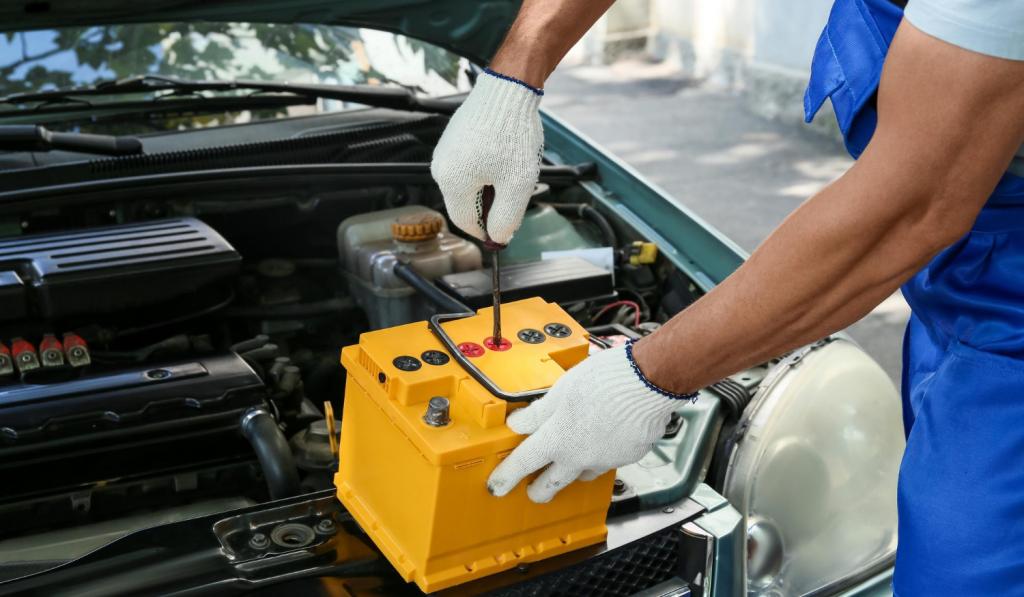
You turn the key. The engine turns over slowly, reluctantly, like it needs a moment to think about it. It starts. You drive off. And you completely forget about it by the time you hit the first junction.
That is how most battery problems begin in Qatar. Not with a dead car, not with a stranded moment at the side of the road. With a hesitation that feels minor enough to ignore.
The trouble is, small hesitations tend to announce something real. And if you have been putting off finding a car battery change nearby, that small hesitation has been doing its best to get your attention.
Slow starts are not just a cold morning thing
Qatar does not really do cold mornings, which is part of why this symptom catches people off guard. Slow cranks are usually associated with winter driving. But the underlying problem, a battery that cannot deliver sufficient current to the starter motor, is not temperature-specific. Heat does its own kind of damage.
Here is what actually happens inside a battery as it ages in a hot climate. The electrolyte solution degrades faster than it would in cooler conditions. The lead plates corrode and shed material. The battery physically cannot hold as much charge as it once did. So when you turn the key and the engine takes a beat too long to fire, what you are actually hearing is a battery that is no longer meeting the demand placed on it.
A few things to look for specifically:
- The engine takes two or more attempts to fire on the first start of the day
- Mornings are noticeably worse than afternoons (after the alternator has had time to top up the battery)
- The cranking sound is slower or lower-pitched than it used to be
- The car starts fine after you have been driving but struggles if it has sat parked for several hours
Any one of these on its own is worth checking. All of them together, that is a battery approaching the end of its useful life.
What your headlights are actually measuring
Headlights draw a consistent and fairly predictable amount of current. That consistency is what makes them useful as a diagnostic tool.
A battery that is healthy keeps the voltage steady across different load conditions. One that is not will show variation. The lights drop when you switch on the air conditioning. They flicker briefly when the engine is idling at a red light. They are noticeably brighter once you accelerate and the alternator picks up the load.
Most drivers notice this at some point and attribute it to something vague, a faulty switch, a loose connection, just the car being old. And sometimes those are the right answers. But the most common cause of variable light brightness in a vehicle that otherwise runs fine is a battery that has lost capacity.
Interior lights tell the same story. Dashboard illumination that dips when you turn on the rear demister, the radio resetting without warning, windows that move more slowly than they should. These are not separate faults. They are the same fault, showing up in different places.
Dashboard warnings: what the icons are actually saying
The battery light
This comes up as a source of confusion fairly regularly. The battery-shaped warning light does not tell you the battery is flat. It means the charging system has detected something outside normal parameters. That something could be the battery, the alternator, a corroded terminal, or a voltage regulator. Any of those warrant a proper check.
What it is not is a light you can ignore for a week while you get round to it.
The check engine light
Fewer people connect this one to the battery, but it is worth knowing. The engine management system in a modern car runs on stable voltage. When a battery degrades and voltage starts fluctuating, sensor readings go erratic. The ECU logs these as faults and triggers the check engine light. Some cars end up in workshops for sensor diagnostics that turn out to be battery problems. The sensor was reading correctly. The voltage feeding it was not.
Battery voltage at rest
If your car gives you access to battery voltage through the instrument cluster or manufacturer app, anything below 12.4 volts with the engine off and no accessories running means the battery is not holding a full charge. Below 12 volts is a battery in real trouble, regardless of how it is still managing to start the car.
The signs people miss until it is too late
Slow starts and dim lights get most of the attention. These tend to get overlooked:
- A battery case that looks swollen or warped. Heat causes the internal components to expand. A distorted case is not cosmetic damage. It means the battery is compromised internally and needs to come out.
- A sulphurous smell near the battery. This is hydrogen gas escaping from a battery that is overcharging or has internal damage. It needs addressing the same day.
- The car’s memory behaves oddly. Seat positions reset. Radio presets disappear. The clock loses time. The battery maintains these settings when the engine is off. A weakening battery starts failing at this before it fails at starting the car.
- A battery that is three or more years old in a hot climate. At this point it does not matter if everything feels fine. The internal degradation is happening whether you can detect it yet or not. Qatar’s summer heat shortens the standard five-year battery lifespan considerably.
Recharge or replace: the question people get wrong
This is where a lot of drivers lose money unnecessarily.
A battery that was drained by accident, lights left on, a door left slightly open overnight, can often be recovered. A full, slow recharge through a proper charger brings it back to normal. The battery itself is fine. It just ran out of charge.
A battery that has degraded internally cannot be recovered this way. You can put full charge into it. The next morning it will be down again. Recharging a dying battery does not fix it, it delays the failure by 24 to 48 hours.
The distinction is straightforward. If your battery holds its charge after a full recharge and starts the car reliably for days afterwards, it probably just needed topping up. If it drops below 12.4 volts again within a day despite nothing drawing from it, you need a replacement. Searching for a car battery change nearby at that point is not overreacting. You are already behind the situation.
Why on-site replacement changes the calculation
The practical problem with battery replacement in Doha is timing. Batteries rarely die in convenient places. They die in car parks, outside restaurants, on the way to early morning appointments. By the time you have arranged a tow, found a workshop, waited for the right battery to be sourced, a few hours have disappeared.
On-site replacement avoids most of that. The technician comes to you, carries the battery, assesses and confirms the fault on location, and does the swap there. You do not need to get the car to a workshop because the workshop, in a sense, comes to you.
This is the model Aone Roadside Assistance operates in Qatar. Their battery replacement service runs 24 hours a day, response times across Doha typically under 30 minutes. They carry stock for a wide range of vehicle makes, which matters more than it sounds when you are sitting in a car park at 10pm hoping someone has your specific battery size.
The battery does not fail at a convenient moment
Nobody’s battery dies on a slow Sunday with nothing planned. It dies when you are already running late, or in an area you do not know well, or when the temperature outside is not something you want to stand in.
The warning signs covered here, the slow cranks, the variable lights, the erratic electrics, the age of the battery, exist precisely because the battery gives you time before it fails completely. That window is smaller than most people think. Heat accelerates the deterioration. And in Qatar’s climate, a battery that feels like it has another few months in it often does not.
If any of this sounds familiar, getting a car battery change nearby sorted now is a different decision from getting it sorted after the fact. One costs an hour. The other costs an afternoon.
Frequently Asked Questions
1. What are the early signs that a car battery needs replacement?
Slow engine starts, dim headlights, and electrical issues like flickering lights are common early indicators. These signs show the battery is losing its ability to hold charge effectively.
2. Can a weak car battery still start the vehicle?
Yes, a weak battery can still start the car temporarily, especially after driving. However, it struggles after being idle and can fail suddenly without warning.
3. How does hot weather affect car battery life?
High temperatures accelerate internal chemical degradation and reduce battery capacity. In hot climates, batteries often fail earlier than their standard lifespan.
4. Should you recharge or replace a weak car battery?
If the battery was accidentally drained, recharging may help. But if it loses charge quickly again, it indicates internal damage and needs replacement.
5. Why is on-site car battery replacement useful?
On-site services save time by replacing the battery wherever the car is stranded. This avoids towing and long wait times, especially during unexpected breakdowns.
